Edutainment: playing and learning the Rapa Nui language
Out-of-school peer-to-peer learning workshops to promote young ambassadors of the Rapa Nui language through games and digital spaces.

Municipality

CL
Isla de Pascua, Rapa Nui,

Category / Sub-Category / Topic

Human development, Youth

Type of investment needed

Grant

Associated SDGs
The challenge

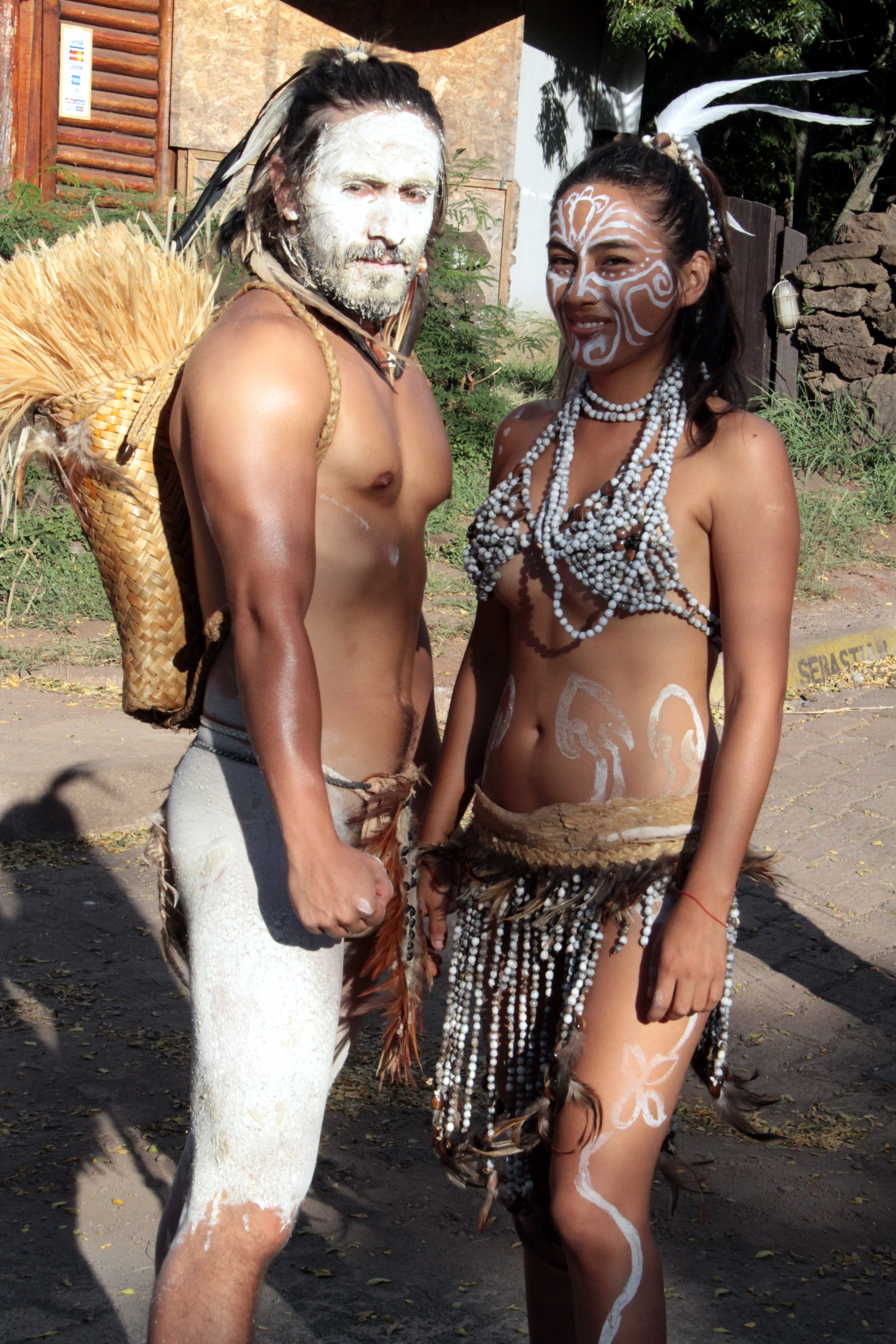
Despite a public bilingual education proposal, the percentage of native speakers of Rapa Nui has been decreasing by generation, with around 10% of speakers with high competence or proficiency in the language in the population under 18 years of age (UNESCO, 2019). The project addresses the challenge of increasing the involvement of high-school students in the Rapa Nui language teaching and learning community. The target population is the Liceo Aldea Educativa students, but potentially opening the audience to the Lorenzo Baeza Vega School students and those from other schools.

The project

The initiative consists of a system of out-of-school peer-to-peer workshops among young people from the commune of Rapa Nui, to promote their Polynesian language through physical playful support and then through a digital platform. These activities would also be managed by young people who are involved in promoting the use of the Rapa Nui language. The objective of the initiative is to generate conditions of high youth involvement through the learning and teaching of the Rapa Nui language in an out-of-school context. The main expected results are: i) to promote the use of the Rapa Nui language on an everyday basis and ii) to increase the motivation of Rapa Nui learners, reducing the intention to drop out of their native language. It is considered that what makes this proposal innovative is the empowerment of students to be creators and co-creators of learning spaces, aiming to transcend beyond the classroom, involving intellect, emotion, and movement. 

The initiative consists of two main strategies:  

Didactic Game: Firstly, a gamification of learning, or edutainment, will be presented through a physical card game. This requires the development of workshops/tutorials among peers focused on the promotion and learning of the Rapa Nui language, led by the Liceo Aldea Educativa students. Students are prepared to be "ambassadors" of the Rapa Nui language, with language workshops using a game and learning methodology, from which a game is prototyped to facilitate the learning of Rapa Nui.

Digital Community: Secondly, the initiative encourages young people to transfer the learning environment created into a digital space. This digital space seeks to develop, create, and curate content, which will be shared by the "ambassadors" and other participants with other communities. 

Know more...


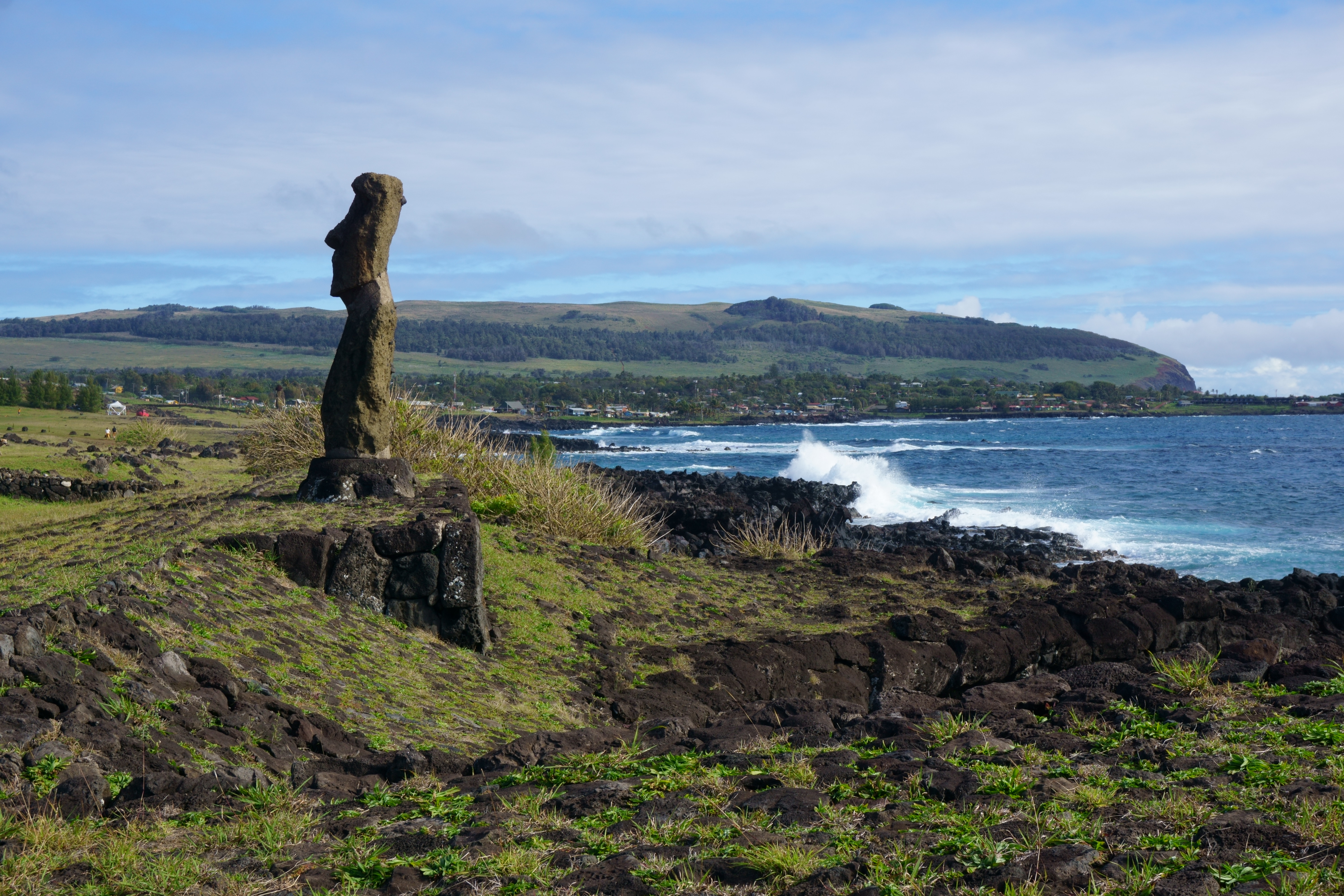
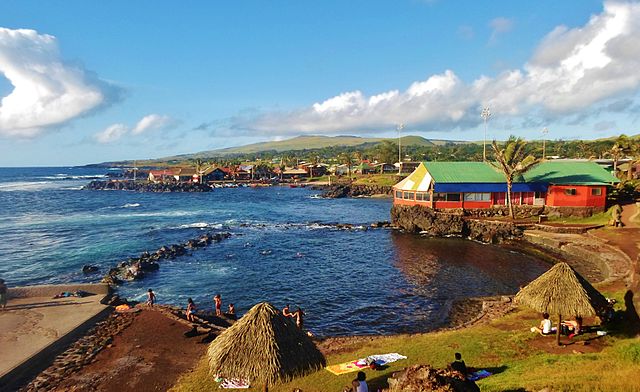
Rapa Nui (or Easter Island) is a province and commune in the Valparaíso region of Chile. Located in the Pacific Ocean, the island has the only population of Polynesian origin in Spanish-speaking territory. It is a place where the Rapa Nui Polynesian language coexists in diglossia with Spanish; in other words, the native Rapa Nui language and Spanish coexist. But in a more globalized world, a large part of the island's child and adolescent population has progressively preferred Spanish over Rapa Nui (Corvalán and Joiko, 2017). With Spanish being the official language in legal, governmental, and educational matters, relegating Rapa Nui to family and cultural contexts. In addition to this, the Rapa Nui language has declined in the number of speakers, and in their command of it, in favor of Spanish (Makihara, 2013). This creates a need to revitalize the language in the regular education system. Some of the initiatives to solve the problem have been language immersion programs in schools, inspired by similar initiatives in Polynesia (Tepano, 2018), with the aim of strengthening the use of Rapa Nui among young people.

Due to its relative isolation from the mainland, and scarcity of natural resources and industry, the main economic activities involve tourism, handicrafts, and fishing. The population is dependent on the Chilean government for various inputs and technologies. On the other hand, there are historical tensions between the culture of the Rapa Nui people and the public administration, which is closer to mainland Chilean society. For these reasons, and because of the difficulty of implementing public policies due to the distance, there is a large gap in the advances in education that one would expect from a developing country. 

Rapa Nui has four schools, including two public schools, governed by Rapa Nui's Department of Municipal School Administration (DAEM). These schools are the Lorenzo Baeza Vega School (LBV) and the Liceo Aldea Educativa (AE). Both schools are in the lower-middle level of educational attainment, according to data from the Ministry of Education (MINEDUC). 

Since 2000, the LBV school implemented a proposal to teach indigenous language in the curriculum - supported by decrees 520 and 280 - and then by the General Education Law, which promotes intercultural bilingual education. In 2006, Liceo AE incorporated specific "Rapa Nui language immersion" subjects. However, numerous families have reported dissatisfaction with the results of the program (according to DAEM reports). On the other hand, the standardized format of teaching in regular schools has done little in terms of motivating full mastery of the language. This has led to a wider generation gap due to a greater preference of youth for Spanish over Rapa Nui (Makihara, 2013). 


Pillar 1 - The Educational Game

  • a. Prototype design of the didactic game - A didactic card game that can facilitate the teaching of the Rapa Nui language is prototyped. Given that the initiative focuses on the students, and although the opportunity for adults and/or teachers to help is open, it is the young people with a high command of the Rapa Nui language who make it possible for their peers to learn the language.
  • b. Prototyping the ludic support (physical) - Elaboration of the contents and its curatorship by the students. A support booklet for the game is developed, in addition to designing the physical material for the game.  
  • c. Prototyping in the school space - Construction of the game mechanics and the required material. The students design the rules and manage the content in such a way as to include vocabulary and phrases in Rapa Nui, and to induce the target audience in the grammar of the language without the use of a dictionary or translations.
  • d. Language workshops - Once the game is created, testing and implementation begin. This process serves to prepare the team of young people who will emerge as "language ambassadors.

Pillar 2 - The Digital Community

  • a. Digital exchange strategy - Facilitated by the learning and work on the didactic game, the process of preparing a public digital community for the promotion of the language begins. A mechanics of exchange and gamification in a digital environment is followed through a public server of the Discord application. The app's server improvements contribute to its maintenance and facilitate the exchange of large files, as well as live transmissions, among other things. Due to the geographical distance from the mainland, it is also proposed to use the Starlink service to ensure a good internet connection.
  • b. Development of digital community - Development and growth of the community, where learning and creations are shared by the participants, as well as emerging as a hub for the exchange and learning of the Rapa Nui language.

Direct results

Didactic game

  • 1 Prototype of functional ludic support for the teaching and learning of the Rapa Nui language.
  • 1 Thematic booklet for participants. The booklet serves as a support for the elaboration of the game or as a reference guide for different topics covered in the language (personal presentation, family, home, the island, food, activities, hobbies, etc.).
  • 1 set of physical card games for learning Rapa Nui.
  • XX Workshop sessions/meetings for the design and implementation of the game.

Digital community

  • 1 Digital community for the exchange of experiences of young people (Discord server), led by the ambassadors, and including a team of five content managers for the community (between three and five people).
  • At least 10 capsules of the language workshops, made by the young people and shared with the community.

Expected impact

  • Increase in the number of young people participating in extracurricular activities in the schools of DAEM Rapa Nui.
  • Increase in the command of the Rapa Nui language, aiming for at least 25% high command and use of Rapa Nui.
  • Application of recreational activities in school and out-of-school learning.

  • DAEM Rapa Nui, 
  • Lorenzo Baeza Vega School (LBV)
  • Aldea Educativa High School (AE)
  • Rapa Nui Language Academy

Corporación MYRE Educación - www.myre.cl - Educational consultant with more than 10 years of experience in public education, specializing in generating new learning and teaching models. Its mission is innovation in educational processes, with the vision that in order to enhance people's learning, new approaches, methods, contents, and pedagogical models must be formulated. MYRE is an organization registered as a provider of Technical Education Consultancy (ATE) and Technical Training Organisation (OTEC) services for teachers and education assistants.

Investment

(*): In kind/pro bonus

(**): Financing

Goods and inputs
Funds
Needed
Covered
Solicited

Materiales para construcción del juego (cartón, coloreado, impresión digital, papel couche) (*) (**)

u$s 3500.00

u$s 0.00

u$s 3500.00

Materiales para el cuadernillo (papel, coloreado, impresiones, anillado) (*) (**)

u$s 1500.00

u$s 0.00

u$s 1500.00

Snacks para encuentros y talleres (*) (**)

u$s 750.00

u$s 0.00

u$s 750.00

20 computadores portátiles (*) (**)

u$s 5000.00

u$s 0.00

u$s 5000.00

Services
Funds
Needed
Covered
Solicited

Instalación de hardware starlink (**)

u$s 3100.00

u$s 0.00

u$s 3100.00

Internet starlink (12 meses) (**)

u$s 2160.00

u$s 0.00

u$s 2160.00

Mejoras de servidor (12 meses) (**)

u$s 840.00

u$s 0.00

u$s 840.00

Human resources
Funds
Needed
Covered
Solicited

Equipo de apoyo pedagógico (3 docentes y 2 académicos de la lengua) (*) (**)

u$s 6000.00

u$s 0.00

u$s 6000.00

2 diseñador(es) gráfico(s) (*) (**)

u$s 4000.00

u$s 0.00

u$s 4000.00

Equipo de gestores de contenido en la comunidad digital (*) (**)

u$s 1000.00

u$s 0.00

u$s 1000.00
TOTAL AMOUNTS:

u$s 27850.00

u$s 0.00

u$s 27850.00

Spread the word about this project